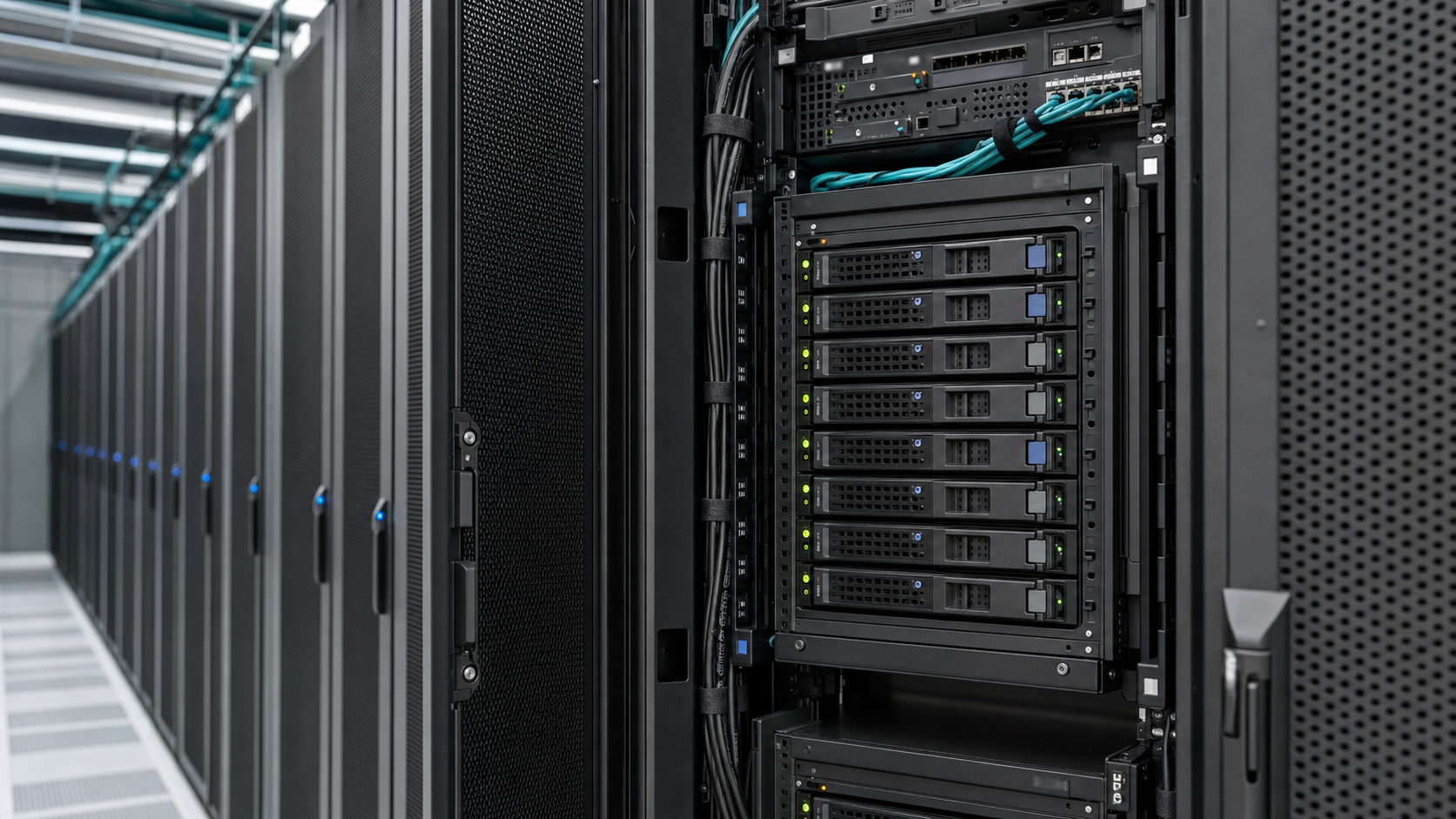
512e (512-byte emulation) and 4Kn (4K native) are sector formats for enterprise HDDs. 512e emulates 512-byte sectors for compatibility with legacy systems but may cause write amplification on unaligned writes. 4Kn uses native 4K sectors, offering better performance and efficiency on modern systems that support it. Choose 512e for broad compatibility, 4Kn for newer deployments with OS support.
Key takeaways
- 512e drives emulate 512-byte sectors for backward compatibility but can suffer write amplification with unaligned writes.
- 4Kn drives use native 4K sectors, offering better sequential performance and reduced overhead on compatible systems.
- Verify OS, application, and RAID controller support before adopting 4Kn; 512e is safer for mixed or legacy environments.
Introduction to Sector Formats
Enterprise hard disk drives (HDDs) have transitioned from traditional 512-byte native sectors to advanced formats. Two common formats are 512e (512-byte emulation) and 4Kn (4K native). 512e drives internally use 4K physical sectors but emulate 512-byte logical sectors for backward compatibility. 4Kn drives use 4K sectors natively at both physical and logical levels. This guide explains the technical distinctions, compatibility considerations, and factors to evaluate when choosing between them for enterprise storage.
The shift to 4K sectors was driven by the need for higher areal density and improved error correction efficiency. 4K sectors reduce the overhead of ECC (Error Correction Code) and increase usable capacity. However, legacy operating systems and applications expect 512-byte sectors, leading to the development of 512e as a transitional solution. Understanding these formats is critical for procurement to ensure alignment with existing infrastructure and performance requirements.
Technical Differences: 512e vs 4Kn
The fundamental difference lies in how data is addressed. In 512e, the drive presents a 512-byte logical block size to the host, but internally reads and writes in 4K physical blocks. This emulation can cause read-modify-write cycles when a write does not align to the 4K physical boundary, potentially degrading performance. 4Kn drives eliminate this emulation layer, as both logical and physical sectors are 4K, ensuring alignment and reducing overhead.
Performance-wise, 4Kn drives can offer better throughput for large sequential workloads due to native alignment. However, for small random writes, 512e may suffer from write amplification if the host I/O is not 4K-aligned. Modern operating systems (Windows Server 2012+, Linux kernel 2.6.31+) support 4Kn natively, but older systems may require driver updates or lack support. It is essential to verify OS and application compatibility before adopting 4Kn.
Compatibility with Operating Systems and Applications
Compatibility is a key procurement factor. 512e drives are widely compatible with most operating systems and applications because they appear as standard 512-byte sector drives. However, performance may degrade if the host software issues unaligned writes. 4Kn drives require explicit OS support. For example, Windows Server 2012 and later, Linux with kernel 2.6.31 or newer, and VMware ESXi 5.5+ support 4Kn. Older versions may not boot or may exhibit errors.
Applications that depend on raw disk access or have hardcoded 512-byte sector assumptions may fail with 4Kn. Database systems like Microsoft SQL Server and Oracle generally support 4Kn if the OS does, but it is recommended to check vendor documentation. For environments with mixed OS versions, 512e may be safer. Always test in a non-production environment before large-scale deployment.
Performance Considerations
For sequential workloads (e.g., video streaming, large file transfers), 4Kn drives can achieve higher throughput due to reduced overhead and native alignment. In benchmarks, 4Kn often shows 5-10% improvement in sequential read/write speeds compared to 512e under aligned I/O. For random workloads, especially small random writes (e.g., database transaction logs), 512e may experience write amplification if the I/O is not 4K-aligned. However, modern enterprise HDDs include write cache and optimization algorithms that mitigate this.
The actual performance depends on the workload pattern and the drive's firmware. For mixed workloads, the difference may be negligible. It is important to evaluate using representative I/O patterns. Additionally, RAID controllers and HBAs must support 4Kn drives; some older controllers may not recognize them or may require firmware updates.
Capacity and Error Correction
Both formats offer similar capacity points, but 4Kn drives typically have slightly higher usable capacity due to reduced ECC overhead. For example, a 4Kn drive may offer 1-2% more usable space than a 512e equivalent. Error correction is more efficient with 4K sectors because the ECC covers a larger data block, improving error detection and recovery. This can be beneficial for archival and nearline storage where data integrity is critical.
However, the capacity difference is usually small and may not be a deciding factor. The primary advantage of 4Kn in error correction is in high-density drives (e.g., 20TB+). For most enterprise applications, the reliability difference is marginal. Always refer to the manufacturer's datasheet for specific error rates and capacities.
Procurement Recommendations
When procuring enterprise HDDs, first assess your current infrastructure. If your servers and storage arrays are modern (post-2012) and all components support 4Kn, consider 4Kn for better performance and efficiency. For mixed environments or legacy systems, 512e is the safer choice. Check your OS vendor's support matrix and your RAID controller's compatibility list.
For new deployments, many enterprises standardize on 4Kn to future-proof. However, ensure that your backup and disaster recovery software also supports 4Kn. If you are migrating from 512e to 4Kn, plan for data migration and potential downtime. Consult with your storage vendor for validated configurations. Yuanxin Memory offers both 512e and 4Kn enterprise HDDs from major manufacturers; contact our team for compatibility assistance.
Conclusion
Choosing between 512e and 4Kn depends on your specific environment and workload. 512e provides broad compatibility, while 4Kn offers performance and efficiency benefits for modern systems. Evaluate your OS, applications, and hardware support before making a decision. For most new enterprise deployments, 4Kn is recommended where supported.
Always verify compatibility with current manufacturer datasheets and server/storage guides. Yuanxin Memory provides technical resources and support to help you select the right drives. Visit our resources page for more information on enterprise HDD sector formats.
Frequently asked questions
Can I mix 512e and 4Kn drives in the same RAID array?
Mixing is generally not recommended because RAID controllers expect uniform sector sizes. Some controllers may support mixing, but performance and compatibility issues can arise. Always consult your RAID controller manual.
Does 4Kn affect data recovery?
Data recovery tools must support 4Kn sector size. Most modern recovery software does, but older tools may not. If data recovery is a concern, verify with your recovery provider.
Are there capacity differences between 512e and 4Kn drives?
Yes, 4Kn drives often have slightly higher usable capacity (1-2%) due to reduced ECC overhead. However, the difference is minor and varies by manufacturer.
Verification sources
For a purchase decision, verify the current manufacturer datasheet and the target server or storage platform guide.